Where costs are rising
- Buildings and building works: +2.7% on the year (+0.6% on the month).
- Roads and railways: +8.1%.
- Utility projects: +8.6%.
- Other civil engineering: +30.6%.
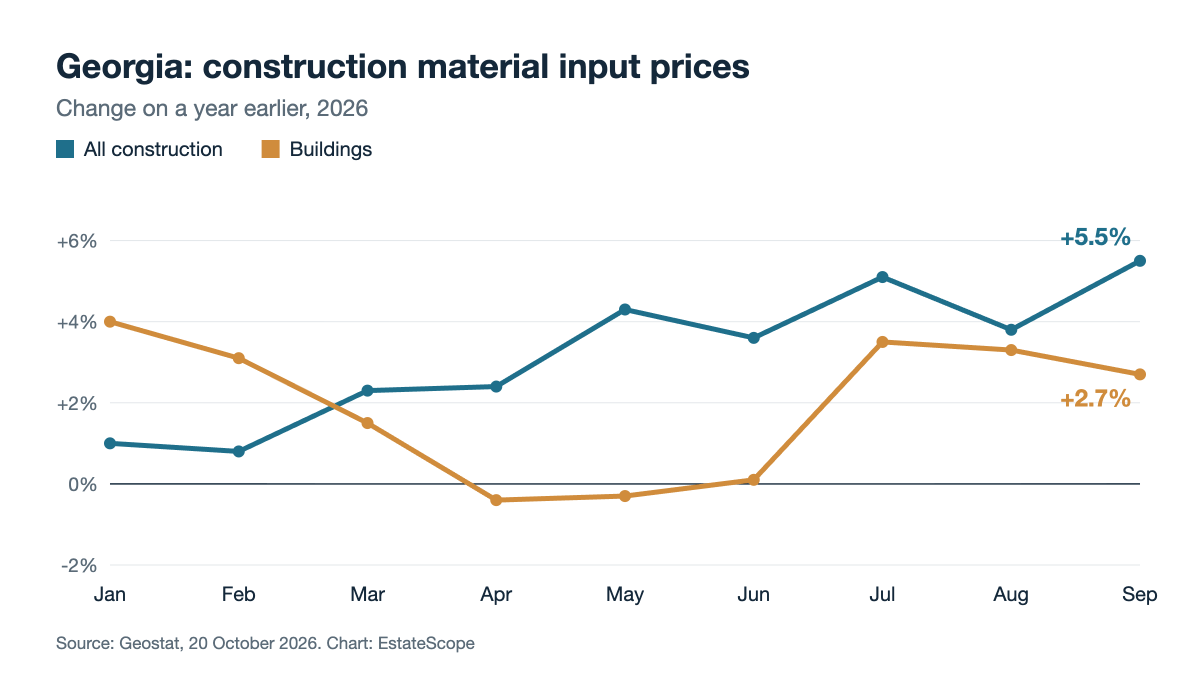
Input costs for residential and other buildings have risen more slowly than for infrastructure. In 2026 their annual rate has stayed between −0.4% and +4.0%.
The total index has accelerated through the year: its annual rate was 1.0% in January, 4.3% in May, 3.8% in August and 5.5% in September. It tracks the prices of materials that construction companies buy; it does not cover wages, land or developer margins.
Why it matters for buyers
Material costs are one part of a developer's budget, alongside land, labour and financing. A 2.7% rise for buildings is moderate, so it does not on its own explain large price increases in new projects. For August costs, see our earlier report.
Sources and limits

National Statistics Office of Georgia (Geostat) ↗
Official statistics · 2026-10-20
This is research, not investment, tax or legal advice. Definitions and observation dates remain attached to every claim.